

El consumo de sal ¿Riesgo o necesidad?
 Por: Emiliano N. Diez y Martínez de la Cotera, Mikhail Benet Rodríguez, Alain F. Morejón Giraldoni, y Rubén García Núñez. Finlay Revista de enfermedades no transmisibles, vol 1, No 3 (2011).
Se realizó una revisión acerca del consumo de sal y sus usos en las diferentes etapas de la historia de la humanidad. Se abordan elementos relacionados con su presencia en el organismo, las funciones fisiológicas esenciales para el mantenimiento homeostático en la vida, así como las complicaciones cuando sus niveles son inferiores a los límites fisiológicos, o superiores a estos. Se analizaron diferentes estudios y sus contradicciones sobre los daños que ocasiona a la salud el consumo de sal. Se precisan los grupos poblacionales sal sensibles (SS) y sal resistentes (SR), pautados por estudios realizados, así como las posibles causas de sus variaciones. Se emiten conclusiones en cuanto a riesgo y beneficio del consumo de sal. [publicada 4 de diciembre 2012.]
A manera de editorial. Los trabajos y opiniones que aquí se exponen son orientadores de lo que se publica en Cuba y en el mundo sobre aspectos relevantes de la hipertensión arterial.
Variabilidad en la medida de la presión arterial periférica. ¿Limitación o marcador de riesgo?
 Por: Morales-Salinas, A. Hipertensión. 2012;29:50-1.- vol.29 núm 02.
Hemos leído con interés el editorial de Oliveras, en el que se analizan los elementos que existen a favor y en contra de la medida de la presión arterial (PA) a nivel periférico (arteria braquial) y central (aorta).
A propósito de este interesante trabajo queremos reflexionar en el hecho que la variabilidad de PA periférica parece tener un papel emergente como marcador de riesgo cardiovascular (RCV) en los pacientes con hipertensión arterial (HTA). En este sentido, Rothwel et al. demostraron que la variabilidad de la PA sistólica en consultas predice mejor el riesgo de ictus, que la PA media; y que además, podría explicar las diferencias que existen en la incidencia de ictus entre los principales medicamentos antihipertensivos, independientemente de sus efectos sobre la PA media. [publicada 27 de noviembre de 2012.]
Exercise blood pressure and the risk of future hypertension
Por: L Holmqvist, L Mortensen, C Kanckos, C Ljungman, K Mehlig y K Manhem. Journal of Human Hypertension (2012) 26, 691–695.
The aim of this prospective cohort study was to identify which blood pressure measurement during exercise is the best predictor of future hypertension. Further we aimed to create a risk chart to facilitate the evaluation of blood pressure reaction during exercise testing. A number (n=1047) of exercise tests by bicycle ergometry, performed in 1996 and 1997 were analysed. In 2007–2008, 606 patients without hypertension at the time of the exercise test were sent a questionnaire aimed to identify current hypertension. [publicada el 27 de noviembre de 2012.]
New Risk Factor Identified for High Blood Pressure during Pregnancy
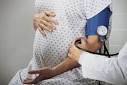 Preeclampsia is a serious complication of pregnancy and the major cause of death for both mother and child in Europe and the U.S. It affects about one in 20 pregnancies. The main symptoms are high blood pressure and protein in the urine. The cause of preeclampsia is still unclear. Dr. Florian Herse (Experimental and Clinical Research Center (ECRC) of the Max Delbrück Center (MDC) and the Charité), Dr. Ralf Dechend (ECRC and Helios Klinikum Berlin-Buch) and their collaborators have now identified an enzyme that is overexpressed in affected women and thus apparently contributes to development of the condition. In animal experiments, the researchers inhibited this enzyme and were able to ameliorate the disease process (10.1161/CIRCULATIONAHA.112.127340).
Preeclampsia originates in the placenta, which supplies the embryo/fetus in the womb with nutrients. For their study, Dr. Herse, numerous contributors, and Dr. Dechend analyzed tissue samples from 25 women diagnosed with preeclampsia and from 23 healthy pregnant women as controls. The tissue samples of the preeclamptic women were obtained from hospitals in Finland, Norway, Austria, and the U.S. that cooperated closely in the study.
Using gene-chip technology, the researchers in Berlin analyzed the expression of almost 40,000 genes. They found that in women with preeclampsia, levels of the CYP2J2 enzyme were unusually high in placental cells and the uterine lining (decidua). The placenta consists of fetal cells; the decidua, by contrast, is solely maternal tissue. The enzyme is involved in the production of specific metabolites called EETs (epoxyeicosatrienoic acids) which, among other things, regulate inflammatory processes, vascular growth, and blood pressure.
Dr. Herse and team succeeded in identifying the cells that produce the CYP2J2 enzyme as trophoblasts, which fulfill an important function in pregnancy. These fetal cells migrate from the placenta into the maternal decidua. Trophoblasts are key contributors to spiral-artery remodeling and thus ensure that the fetus is sufficiently supplied with nutrients. However, if the trophoblasts do not grow deeply enough into the decidua, this remodeling process is disturbed. As a consequence, the fetus cannot be sufficiently supplied with nutrients, leading to preeclampsia. EETs evidently have a harmful effect because they activate a substance which prevents the trophoblasts from growing into the decidua.
Both a protective and damaging effect
Previous studies indicated that EETs exert only positive effects on the cardiovascular system. EETs generally mediate vascular expansion and reduce blood pressure. They also protect the tissue from dying of oxygen deficiency. In normal pregnancies EET levels are slightly elevated.
Previous experiments with healthy pregnant rats showed that pharmacological inhibition of the CYP2J2 enzyme and the associated inhibition of EET production lead to hypertension and kidney failure. In pregnant rats with preeclamptic symptoms, however, opposite effects may occur. By inhibiting CYP2J2, the ECRC researchers were able to lower blood pressure levels in these animals.
How did these conflicting observations come about? Dr. Herse and team demonstrated that the EETs can be converted into other metabolites. A specific enzyme (cyclooxygenase, COX) alters these components further in such a way that they cause vasoconstriction and thus an increase in blood pressure. EETs that normally lower blood pressure can evidently produce metabolites that cause blood pressure to rise in preeclampsia. If however the researchers inhibited the cyclooxygenase in the pregnant animals, the EETs were not converted further and the blood pressure did not increase. “This work shows that the increased production of EET in the placenta and the conversion via cyclooxygenase into hormones that increase blood pressure both favor the development of preeclampsia,” Dr. Herse and Dr. Dechend explained.
Messenger substance of the immune system apparently promotes the development of preeclampsia
But why do the bodies of women with preeclampsia produce more CYP2J2 and thus more EET? Tumor necrosis factor-alpha (TNF-alpha), a chemical messenger of the immune system, could possibly contribute. This signaling substance is released at early stages of pregnancy whenever placental blood flow is too low, causing oxygen deficiency. As the researchers showed, TNF-alpha promotes the production of CYP2J2 and EET in the placenta. In other tissues, this reaction would be useful, since EET rescues tissue from dying that has an insufficient supply of blood and therefore of oxygen. In the placenta, by contrast, this boost in production of CYP2J2 and EET could lead to a vicious circle. The trophoblasts do not grow as well into the decidua and the blood vessels and are not remodeled correctly, so that blood flow through the placenta and blood supply to the fetus deteriorates. As a consequence, the mothers becomes hypertensive and EETs under these conditions is converted in such a way that the blood pressure continues to increase.
Treatment of preeclampsia, which according to estimates costs many thousands of maternal lives across the globe every year, remains difficult. The only possibility is to induce delivery at an early stage if the clinical presentation is severe. In Germany, preeclampsia is the cause for up to 20,000 premature births annually. Once the child is born, the symptoms subside in the mother. Nevertheless, she may suffer long-term increased risk for cardiovascular disease and develop heart attack, stroke, or hypertension at an early age. For the child, depending on the stage of fetal development, the premature birth may result in death or severe lifelong disability, and the child may also have an increased risk for cardiovascular disease later on. The research conducted by Dr. Herse, the entire team, and Dr. Dechend implicates a previously unknown mechanism. Their discovery may contribute to a better understanding of the disease process and its causes, and may ultimately aid in developing a therapy.
(Fuente: http://www.mdc-berlin.de) [publicada: 22 de noviembre 2012] [publicada en la página: 26 de nov. 2012]
Presión arterial sin control puede dañar el cerebro a los 40 años de edad.
 La presión arterial alta no controlada daña la estructura y función del cerebro tan pronto como al inicio de los 40 años de edad, según un estudio de la Universidad de California en Davis.
Según el estudio, incluso los cerebros de personas en edad madura, que no tenían un diagnóstico clínico de hipertensión, muestran evidencia del silencioso daño estructural del cerebro.
La investigación descubrió un “envejecimiento acelerado” del cerebro en personas con hipertensión y prehipertensión en la década de sus 40 años de edad, que incluía daño a la integridad estructural de la materia blanca del cerebro y al volumen de su materia gris.
Ese hallazgo sugiere que la lesión vascular del cerebro “se desarrolla insidiosamente durante toda la vida con efectos visibles”, indicó el estudio.
Se trata del primer estudio que demuestra que hay un daño estructural en los cerebros de adultos al inicio de la edad madura como resultado de la alta presión arterial.
La alta presión arterial ya ha sido vinculada con el daño estructural a la materia blanca del cerebro y el deterioro cognitivo en los individuos de edad avanzada.
La investigación, publicada en línea en la revista médica The Lancet Neurology (doi:10.1016/S1474-4422(12)70241-7) y que aparecerá en el ejemplar impreso de diciembre próximo, enfatiza la necesidad de poner atención a los factores de riesgo vasculares para el envejecimiento del cerebro, explicó Charles DeCarli, coautor del estudio.
“El mensaje aquí es sumamente claro: Las personas pueden influenciar la salud del cerebro a la edad avanzada, conociendo y tratando su presión arterial mientras son jóvenes”, observó DeCarli, profesor de neurología y director del Centro de la Enfermedad de Alzheimer de UC Davis.
“Las personas en nuestro estudio eran normales desde el punto de vista cognitivo, así que la ausencia de síntomas no significa nada”, precisó.
La presión arterial normal debe ser de 120 para la presión arterial sistólica, o sea el número en la parte superior, y por debajo de 80 para la presión diastólica, el número en la parte inferior.
Se calcula que cerca de 50 millones de estadounidenses sufren de hipertensión, condición vinculada con un riesgo del 62 % de enfermedad cerebrovascular, como un ataque isquémico, y un riesgo del 49 % de enfermedad cardiovascular. Es el factor de riesgo más grande de mortalidad en EE.UU., indicó el estudio. Otros estudios han identificado vínculos entre la presión arterial elevada y un mayor riesgo de lesión cerebral y atrofia, que conduce a un desempeño cognitivo reducido y a una mayor probabilidad de demencia. Por ello, se considera que la hipertensión es un importante factor de riesgo “modificable” para el deterioro cognitivo en la vejez.
Según el estudio, hay evidencia de que reducir la presión arterial a partir de los 40 años de edad y entre personas al inicio de su vejez puede ayudar a prevenir el deterioro cognitivo y la demencia en la ancianidad.
El estudio, titulado “Los efectos de la presión arterial sistólica en la integridad de la materia blanca en los adultos jóvenes: del estudio del corazón de Framingham”, incluyó a 579 participantes de Framingham (Massachusetts) que, en promedio, tenían 39 años de edad cuando se les reclutó para el estudio, iniciado en 2009.
Los participantes fueron divididos entre los que tenían presión arterial normal, los que eran prehipertensos y los que tenían alta presión arterial. También se tomó en cuenta factores como el tratamiento médico para la alta presión arterial y el uso de cigarrillos.
El estudio recurrió a imágenes por resonancia magnética (MRI, en inglés) para determinar la salud cerebral de los participantes, usando varias medidas de la lesión de la materia blanca, como la anisotrofía fraccional, y el volumen de la materia gris.
En personas hipertensas, la anisotrofía fraccional en los lóbulos frontales fueron se redujo en un promedio del 6.5% por ciento, y esos individuos también registraron una reducción, en promedio, del 9% de la materia gris en el lóbulo frontal del cerebro.
Los autores notaron que la rigidez de las arterias, con el proceso de envejecimiento, causa un aumento de la presión arterial, lo que a su vez provoca que disminuya el flujo de sangre al cerebro.
Tomado: Effects of systolic blood pressure on white-matter integrity in young adults in the Framingham Heart Study: a cross-sectional study.The Lancet Neurology, 2 Nov 2012.
(Fuente: Boletin Aldia. Infomed) [Publicada por: EFE el 31 de octubre 2012] [publicada en la página 15 de noviembre 2012.]









Comentarios recientes