

En esta sección les exponemos algunos artículos publicados sobre la hipertensión arterial
 Articulos de la Revista JAMA
Aortic Stiffness, Blood Pressure Progression, and Incident Hypertension
Por: Bernhard M. Kaess, MD; Jian Rong, PhD; Martin G. Larson, ScD; Naomi M. Hamburg, MD; Joseph A. Vita, MD; Daniel Levy, MD; Emelia J. Benjamin, MD, ScM; Ramachandran S. Vasan, MD; Gary F. Mitchell, MD. JAMA. 2012;308(9):875-881
Por: Ferran Barbé, MD; Joaquín Durán-Cantolla, MD; Manuel Sánchez-de-la-Torre, PhD; Montserrat Martínez-Alonso, BSc(Stat); Carmen Carmona, MD; Antonia Barceló, MD; Eusebi Chiner, MD; Juan F. Masa, MD; Mónica Gonzalez, MD; Jose M. Marín, MD; Francisco Garcia-Rio, MD; Josefa Diaz de Atauri, MD; Joaquín Terán, MD; Mercedes Mayos, MD; Mónica de la Peña, MD; Carmen Monasterio, MD; Felix del Campo, MD; Josep M. Montserrat, MD; for the Spanish Sleep and Breathing Network. JAMA. 2012;307(20):2161-2168.
Association Between Treated and Untreated Obstructive Sleep Apnea and Risk of Hypertension
Por: José M. Marin, MD; Alvar Agusti, MD; Isabel Villar, PhD; Marta Forner, PhD; David Nieto, MD; Santiago J. Carrizo, MD; Ferran Barbé, MD; Eugenio Vicente, MD; Ying Wei, PhD; F. Javier Nieto, MD, PhD; Sanja Jelic, MD. JAMA. 2012;307(20):2169-2176.
Por: Katarzyna Stolarz-Skrzypek, MD, PhD; Tatiana Kuznetsova, MD, PhD; Lutgarde Thijs, MSc; Valérie Tikhonoff, MD, PhD; Jitka Seidlerová, MD, PhD; Tom Richart, MD; Yu Jin, MD; Agnieszka Olszanecka, MD, PhD; Sofia Malyutina, MD, PhD; Edoardo Casiglia, MD, PhD; Jan Filipovský, MD, PhD; Kalina Kawecka-Jaszcz, MD, PhD; Yuri Nikitin, MD, PhD; Jan A. Staessen, MD, PhD; for the European Project on Genes in Hypertension (EPOGH) Investigators. JAMA. 2011;305(17):1777-1785.
[Actualizado: 22 de mayo de 2013]
 Por: Adolfo Fontenla, José A. García-Donaire, Felipe Hernández, Julián Segura, Ricardo Salgado, César Cerezo, Luis M. Ruilope y Fernando Arribas. Rev Esp Cardiol. 2013;66:364-70 – Vol. 66 Núm.05.
La hipertensión resistente es un problema clínico por la dificultad de su tratamiento y el aumento de morbimortalidad que conlleva. Se ha demostrado que la denervación renal por catéter mejora el control de estos pacientes. Se describen los resultados de la creación de una unidad multidisciplinaria para la implementación de la denervación renal en el tratamiento de la hipertensión resistente.
La denervación renal implementada mediante un programa multidisciplinario ofrece una mejora en la presión arterial similar a la de estudios previos, con mayor reducción de fármacos antihipertensivos.
[Actualizado: 21 de mayo de 2013]
JNC 2013: Simplified BP Goal in Sight
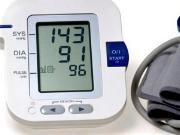 The upcoming JNC 2013 update is likely to go with a hypertension treatment target of 140/90 mm Hg for all but older adults, a panel of experts on the guidelines committee suggested.
A “one-size-fits-most” goal seems to work well, although the higher target is defensible for patients over age 60, particularly those past 80, Raymond Townsend, MD, of the University of Pennsylvania in Philadelphia, told attendees here at the American Society of Hypertension meeting.
He unofficially reviewed the available evidence base for the latest Joint National Committee on Prevention, Detection, Evaluation, and Treatment of High Blood Pressure guidelines, formerly known as JNC-8 and now renamed JNC 2013.
Although the presentation indicates a commitment to getting the new guidelines out within the year, it’s still not clear when the National Heart, Lung, and Blood Institute will release the document, William Cushman, MD, of the VA Medical Center in Memphis, Tenn., told MedPage Today. He was involved with the guidelines but did not speak at the session.
The major question facing the committee this time around was the treatment target, ASH president-elect Domenic Sica, MD, commented in an interview.
The JNC-7 recommended less than 140/90 mm Hg overall and 130/80 mm Hg in the presence of diabetes, heart failure, or chronic kidney disease. Townsend suggested simplification to a single target in JNC 2013.
“At the end of the day when you boil all this down, you look at the general population, you look at the patients with diabetes, you look at the patients with chronic kidney disease, it turns out the wisdom we’ve used in the past, which we’ve been arguing about for the past decade, turns out to have been fairly wise,” Townsend said.
When asked how to reconcile the stricter American Heart Association and American College of Cardiology guidelines targeting 130/80 mm Hg for blood pressure control, Suzanne Oparil, MD, of the University of Alabama at Birmingham, noted that an update to those guidelines is due out within the next few months as well.
“Without being specific, they’ve pushed back, or pushed up, thresholds and goals for treatment,” she commented. Oparil is a member of both committees.
“Cardiologists are very aggressive, but when we looked back at the evidence, the evidence wasn’t there and … careful analyses of large trials in high-risk people showed that you can do harm from lowering blood pressure too much,” Oparil told the audience.
“JNC is strictly evidence based with some necessity for expert opinion where there is no evidence. We don’t feel obliged to reconcile our recommendations with anybody else’s,” she added.
That’s part of the reason the guidelines won’t dive too deeply into pharmacology, “such as beta-alpha versus beta alone, simply because there’s just not a lot of data to let us do that,” Townsend noted. “So we tended to be a little more generic rather than specific and we tried to provide recommendations that are both defensible as well as actionable.”
However, most of the comments at the session centered on the relative ranking of beta-blockers in therapy lines.
“Based on recent guidelines, but not necessarily JNC-8, the degree of blood pressure reduction achieved, and not the initial anti-hypertensive class of agents chosen, is more important for improving cardiovascular outcome in those with hypertension,” Barry Carter, PharmD, of the University of Iowa in Iowa City, concluded in his talk on pharmacology elements of JNC 2013.
He and all the other committee members at the conference were diligent in stating the opinions expressed were their own.
Nevertheless, reading between the lines probably isn’t too hard when all the component evidence is already known, Cushman acknowledged.
Although written and awaiting the final go-ahead, he suggested the paper isn’t likely to publish before June.
Henry Black, MD, of NYU Langone Medical Center in New York City, who wasn’t on the current committee, blamed the Institute of Medicine for prompting a much more intensive evidence review. “It took us 3 months on JNC-7; it has taken 3 years for JNC 2013,” he said
(Fuente: www.medpagetoday.com) [Actualizado: 21 de mayo 2013]
La hipertensión arterial, principal motivo de consulta en la atención primaria
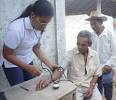 Expertos recomiendan extremar las precauciones y vigilar para que la presión no rebase los valores 140/90 mmHG, considerados peligrosos.
La hipertensión arterial se ha convertido en el principal motivo de consulta en atención primaria, según señalan en una nota la Sociedad Española de Hipertensión – Liga Española para la Lucha contra la Hipertensión Arterial (SEH-LELHA), con motivo de la celebración este viernes, 17 de mayo, del Día Mundial de la Hipertensión, trastorno que, sólo en España, afecta a casi 14 millones de personas, de los que el 14% está fuera de control.
La recomendación de SEH-LELHA es extremar las precauciones y vigilar que la presión arterial no rebase los valores considerados peligrosos, entre 140mmHG de máxima y 90 mmHG de mínima. Para ello, esta sociedad aconseja tomarse la presión arterial periódicamente a fin de evaluar lo antes posible el riesgo individual.
La presidenta de SEH-LELHA, la doctora Nieves Martell, manifiesta que la hipertensión “es una señal de alerta de la presencia de otros muchos factores de riesgo cardiovascular”.
A fin de evaluar el riesgo de hipertensión, nace la app gratuita para Android y iPhone Alerhta, siglas de ‘Aléjate de los riesgos de la hipertensión arterial’.
Esta herramienta, patrocinada por Pfizer con el asesoramiento de la SEH-LELHA y pensada para hipertensos, familiares y cuidadores, permite anotar los valores de lectura en las diferentes tomas del día diferenciándolas por fecha, hora, resultados, métodos de medida y lugar de la misma.
(Fuente: JANO) [Actualizado: 20 de mayo de 2013]
The effect of antihypertensive drugs on chronic kidney disease: a comprehensive review
 Por: Anastasia G Ptinopoulou, Maria I Pikilidou y Anastasios N Lasaridis. Hypertension Research (2013) 36, 91–101.
Data from randomized clinical trials and epidemiological evidence identify systemic hypertension as the second most common modifiable risk factor for chronic kidney disease (CKD) progression after diabetes mellitus. CKD may progress silently over the years and early diagnosis and control of hypertension is of major importance in delaying renal function decline. Recent guidelines for the treatment of hypertension suggest the use of a variety of antihypertensive drugs in order to achieve the desired blood pressure levels. Renin–angiotensin system inhibitors have been undoubtedly studied the most and are suggested by guidelines and experts as first choice in patients with hypertension and renal injury, particularly in those with diabetes, as they have repeatedly shown to significantly reduce proteinuria. [Actualizado: 20 de mayo 2013]










Comentarios recientes